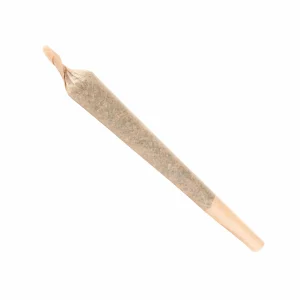

Delta-8 flowers go through a rigorous production process because they do not grow naturally in cannabis plants. They require a few steps, including extraction, selecting premium CBD flowers, and eventually adding Delta-8 distillate.
While it has not surpassed the overall popularity of Delta-9 THC, Delta-8 has begun to creep into the cannabis public consciousness because of how it skirts around federal laws through the 2018 Farm Bill. Ultimately, it has piqued the curiosity of seasoned herb enthusiasts.
So, in case Delta-8 THC has also caught your attention, this article should let you know more about it, particularly the process to turn it into flower form.
🔑 Key Takeaways
- Delta-8 THC occurs naturally in hemp, but only in very small amounts. To create Delta-8 flower, manufacturers typically infuse hemp buds with Delta-8 extract.
- There are three ways to infuse Delta-8 THC into hemp flowers: spraying, soaking, and cold infusion. Each has its drawbacks, but one has been deemed the safest and most effective.
- The stricter upcoming changes to federal hemp laws have put Delta-8 flowers at risk of going out of circulation in the legal market.
Why Delta 8 Flower Has to Be Made, Not Grown?
Unlike Delta-9 THC, which naturally exists in the cannabis plant, Delta-8 only comes in microscopic, trace amounts, typically less than 0.1%. That means harvesting them would be nearly impossible.
Delta-8 is also not actively synthesized by the cannabis plant’s enzymes, meaning the plant doesn’t have the internal capabilities to build the cannabinoid on its own. It only appears when Delta-9 is exposed to heat, light, and oxygen for prolonged periods, which also means it naturally degrades.
Because it appears in minuscule amounts, trying to extract enough natural Delta-8 THC from raw plants would require dealing with acres of crops. On a commercial scale, that would be impractical.
So, cultivators found a way to process Delta-8 THC, which involves quite a number of steps.
The Step-by-Step Process of Making Delta 8 Flower
Making Delta-8 flower requires merging two different products: clean, legal CBD buds and a lab-converted Delta-8 distillate. The distillate itself is thick and sticky, almost like cold honey, so it needs to go through a few steps to get into the plant without ruining its smokability.
Step 1: CBD Isomerization
This first process takes place in a lab, where chemists begin with high-purity CBD isolate extracted directly from legal hemp. In order for hemp to be legal, it must not exceed the 0.3% THC threshold mandated by the US federal government.
Chemists will then dissolve the CBD in an organic solvent containing an acid catalyst, such as hydrochloric acid or p-toluenesulfonic acid, before applying heat. It triggers a chemical reaction that forces the CBD molecules to rearrange their structural bonds, ultimately converting them into Delta-8 THC.
Step 2: Purification
The CBD-solvent mixture is crude and contains acids and residues. This is where the necessary purification process comes in. Here, the lab neutralizes these remnants with an alkaline wash before running the liquid through a vacuum distillation or chromatography setup.
The goal here is to strip away all chemical agents, leaving behind a thick, amber-colored Delta-8 distillate that is around 90% pure.
Step 3: Prepping the Base Flower
As the chemical mixture undergoes the necessary processes in the lab, producers will begin selecting premium industrial hemp buds. Once picked out, the flowers are dried, cured, and closely trimmed.
Most producers use a commercial dryer at very low heat, just enough to pull out any residual moisture. This ensures that the distillate sticks perfectly to the leaves later on.
Step 4: Thinning
Once the Delta-8 distillate reaches room temperature, its texture resembles a solid block of glue. This is where manufacturers will heat the oil to approximately 140°F (60°C) until it flows like water. Sometimes, they may thin it down by adding in liquid terpenes.
Terpenes are the preferred material in this case because they restore the original aroma and flavor that are lacking in pure distillate.
Step 5: Infusion
This is where the liquid Delta-8 is applied to the hemp flower. Producers typically use either one of two commercial methods:
Spraying, which involves placing the thinned distillate into a pressurized spray gun and misting it over the hemp buds.
Vacuum infusion is another option, which involves placing the flower in a vacuum chamber with the distillate. The machine then completely evacuates the air, forcing the Delta-8 to seep into the plant’s inner stem for a more even distribution.
Step 6: Kief dusting and Curing
The wet, sticky flowers from the oil are immediately tossed into a fine powder of CBD or CBG kief, which blankets the wet distillate to seal it in. The result is a flower that comes with a naturally frosty appearance that won’t stick to the packaging, a grinder, or your fingers.
Spraying vs. Soaking vs. Cold Infusion
As we’ve previously mentioned. Delta-8 cannabis flowers are actually industrial hemp buds manually fortified with Delta-8 distillate. To achieve the desired results, producers use three main methods that vary significantly.
Spraying (Cost-Effective)
This would be the most cost-effective method among the three. Because Delta-8 distillate is thick and viscous at room temperature, as we mentioned earlier, you can’t put it in a spray bottle. So to thin it out, manufacturers either dilute it with a liquid solvent or heat it until it becomes runny.
However, the flip side of the cost-effectiveness is that the distribution remains at the surface level. In many cases, one side of the bud is wetter than the other. Buds also tend to look oily and feel sticky and gummy. In the opposite end, they may dry out or be unusually harsh.
And with the uneven distribution of distillate comes uneven burns or sizzles when you spark it up.
Another important thing to note about this method is that using cheap alcohol increases the risk of solvent leftovers.
| You Might Want to Read: How To Tell If Weed Is Sprayed With Terpenes? |
Soaking (Highly-Concentrated)
As the name suggests, this method involves submerging the buds directly into a warm mixture of Delta-8 distillates and solvents. The flower is then pulled out and left to cure or dry out upon saturation.
Since the buds are soaked, they are saturated to the core, making them highly concentrated. However, they may also come out unevenly throughout the entire batch.
In terms of appearance and texture, buds soaked in Delta-8 distillate are often dense, dark, soggy, and almost wet-looking. They are also incredibly sticky to break apart.
When it comes to smokeability, soaked buds are heavy and harsh. And because of the higher distillate saturation, keeping it lit could be challenging.
But the biggest drawback is the very high likelihood of solvent leftovers. This is primarily due to the reliance on solvents to keep the bath fluid enough to soak, so much of the residue tends to remain.
Cold Infusion (Solvent-Free)
This method is the newest on this list and does not use solvents. It’s a method developed to preserve the flower’s underlying integrity.
Instead of melting or dissolving the thick, sticky distillate, producers freeze it until it is brittle and solid. They then pulverize it into a fine, frozen powder and toss it with the hemp flowers in a cold environment.
This method allows the frozen distillate dust to work its way into the bud’s deeper crevices. The last step involves exposing the cold-infused buds to mild room temperature to allow the powder to fuse to the plant without altering its structure.
This is by far the most effective method, as it provides an exceptionally even distribution while keeping the trichomes intact. It is also a smoother smoke with a cleaner burn, mimicking the natural smoking profile of regular cannabis.
Most notably, there is almost zero chance of solvent leftovers.
How Much Delta 8 Goes Into the Flower?
Potency depends on how much Delta-8 distillate is infused into hemp flower, with finished products commonly ranging from about 10% to 30% Delta-8 content by weight.
For example, a 10% infusion equals roughly 100 mg of Delta-8 per gram of flower, while 20% and 30% infusions correspond to about 200 mg and 300 mg per gram, respectively.
It’s likewise important to note that the infusion method changes these computations. For soaking that leads to oversaturation, flowers may contain up to 40% of Delta-8 by weight.
When sprayed, THC levels tend to be inconsistent because paint sprayers hit the pile of buds from above, leaving the bottom side and inner cores completely dry. So, if one nugget contains 35% Delta-8, another one right next to it may contain only 5%.
Cold infusion still provides the best consistency, with Delta-8 THC levels remaining at a stable 18% to 25%.
The entourage effect also plays a role here. Keep in mind that Delta-8 isn’t the lone cannabinoid here. High-quality hemp flowers may also contain 15% CBD or CBG.
With all the cannabinoids working together, this means a clean, cold infusion with 20% Delta-8 will feel much smoother and more balanced than the 40% soaked bud.
Is Delta 8 Flower Natural or Synthetic?
Most experienced producers and manufacturers would classify Delta-8 flower as semi-synthetic. It involves using a 100% natural plant and coating it with a chemically converted active ingredient (Delta-8 distillate), creating a hybrid.
Likewise, chemists and federal agencies such as the US Drug Enforcement Administration (DEA) classify commercial Delta-8 distillate as a synthetically derived cannabinoid because the molecules are intentionally synthesized in a laboratory through chemical reactions.
What the New Hemp Law Means for Delta 8 Flower?
The US government, through Congress’s Continuing Appropriations and Extensions Act (CAEA), is imposing a new and stricter federal hemp law by the end of the year.
Starting November 12, 2026, the 0.3% threshold per dry weight will no longer be calculated by Delta-9. Instead, qualifications use a total THC standard, which means even Delta-8 THC cannot exceed these limits.
And because Delta-8 flowers require a high volume of distillate, usually around 10% to 30% by dry weight, to deliver the desired effects, all honest lab tests will definitely go beyond these boundaries.
These new laws will put the market in a highly volatile transition phase, which may ultimately lead to the national retail and mail-order market for Delta-8 flower. However, pro-hemp lawmakers have been actively filing amendments to either push the federal deadline back to late 2027 or establish a different regulatory framework.
Until then, the November 2026 target remains the active timeline.
How Retailers Should Evaluate Delta 8 Flower Before Stocking?
Because Delta-8 flowers are essentially assembled products, they require a radically different approach than sourcing traditional cannabis or CBD. Retailers must assume unique legal, safety, and inventory risks when they decide to put it on their shelves.
1. Full Certificate of Analysis (COA).
Retailers must never accept a “potency-only” lab sheet. There must be a compliant and trustworthy COA (Certificate of Analysis) generated by an independent, ISO-certified, third-party lab that closely looks at residual solvent levels, the relationship between Delta-8 and other cannabinoids, and the Delta-9 threshold.
| You Might Want to Read: How to Read a Certificate of Analysis (COA): A Retailer’s Guide |
2. Physical product inspection.
This is quite self-explanatory. But before placing an order for a full case, for example, retailers must request sample buds to see if any look too dark or wet, or are abnormally shiny. Then there is the sizzle test to check whether the buds crackle, spark, burn with an oily black ash, or smell of chemicals, all of which are signs that the products belong in the reject pile.
Conclusion
While Delta-8 flowers are a byproduct of legalization-driven innovation, newer laws could impede their momentum. And as regulations tighten, production quality becomes more about business survival than just consumer preference.
As a manufacturer, your goal should still be to deliver the best quality product while also complying with federal laws. This means shifting to more suitable methods, such as cold infusion, since solvent-sprayed or soaked buds will likely be the first to be wiped out by enforcement.
As a consumer, vigilance is key. If a brand cannot tell you exactly what the process is for their Delta-8 flowers, it would be best to avoid it altogether. While Delta-8 flower requires an added infusion step to produce, flower is naturally cultivated and preserved in its raw form. The Hemp Doctor Wholesale offers a range of living-soil-grown strains designed to maintain strong cannabinoid and terpene profiles. Apply for a wholesale account to access bulk pricing on our flower lineup.