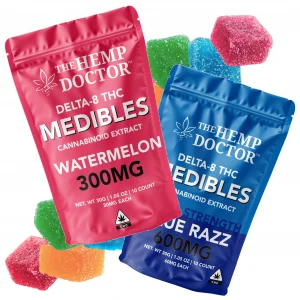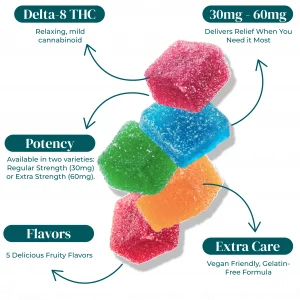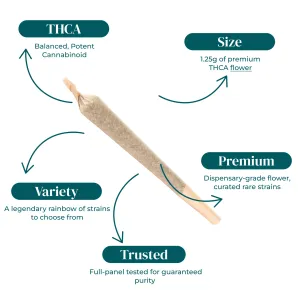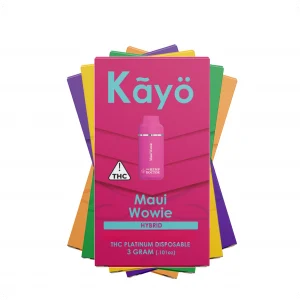

Most hemp retailers invest in good inventory and then leave the selling to chance. A well-stocked case does not move product on its own. The gap between a customer who buys and one who walks out empty-handed almost always comes down to one thing: whether your staff could connect what is on the label to what the customer was actually looking for.
Knowing how to translate hemp product specs into sales is the skill that closes that gap. This guide gives your team a line-by-line framework for turning features into benefits, three talk tracks they can use today, and merchandising moves that keep working while your staff is tied up with another customer.
Key Takeaways
- Every spec on a hemp label or COA has a customer benefit hiding inside it.
- Lead with the benefit and use the spec as the proof, not the other way around.
- Compliance-safe phrasing protects your store while still selling the experience.
- A visible COA on the shelf closes skeptics faster than any markdown.
- Suppliers who publish per-batch lab reports give your staff a credibility advantage from the first conversation.
What Are Hemp Product Specs, Really?
Before your staff can translate specs, they need to know what they are looking at. Hemp product specs live across two documents. The first is the product spec sheet, which covers potency, milligrams per serving, ingredients, and serving count. The second is the Certificate of Analysis, or COA, which is the third-party lab report that either backs up or contradicts what the spec sheet claims.
Together they tell you the cannabinoid profile, whether that is Delta-9, Delta-8, CBD, CBG, or a blend, the total THC level, the terpene profile, the batch number, and the full quality screening results. The label pulls the highlights. The COA is the receipt. If a supplier cannot produce one, move on.
Why Specs Sell: The Trust Gap in Hemp Retail
Your customers are arriving skeptical, and they have good reason to be. Between gas-station products with no real ingredient transparency and years of inconsistent experiences across the category, new buyers show up half-expecting to be misled. First-timers bring a second worry on top of that: taking too much and having a bad night. Transparent specs are how you close both concerns in a single conversation rather than losing the sale entirely.
The data makes this concrete. According to a survey of over 10,000 Hemp Doctor customers, only 2.4% said they relied on a budtender or retailer recommendation to find the right product. Most of your customers are arriving with their own research already done. The stores that convert those customers are the ones whose staff can meet them where that research landed, with the right spec reframed as the right benefit.
“If you don’t put something in front of your customer with a reason that it’s going to work for them, they’re never going to discover it. A more educated staff has a better chance of closing a higher ticket.” — Samantha Evers, Retail Location Marketing Strategist, The Hemp Doctor
Customers do not buy specs. They buy what specs do for them. When a hesitant question gets answered with a confident number backed by a current lab report, that shopper has a clearer reason to buy and a stronger reason to return. Learning how to sell hemp products well means pairing proof with plain language every single time.
Lead With Benefits, Not Features
The single most useful shift your staff can make is this: stop opening with what the product contains and start opening with what it does for the customer. A feature tells someone what is in the jar. A benefit tells them why they should want it. That is the whole framework in one sentence.
The example is simple but it is the one that shows up most often on the floor:
Instead of: “Contains live resin.”
Say: “Offers a richer flavor profile that many customers prefer.”
The spec is still accurate. The customer just hears it in a way that means something to them before they have done any reading. Every translation in the section below runs on this same logic.
How to Translate Hemp Product Specs Into Sales: A Line-by-Line Framework
Run through each spec category below with your team. The pattern is the same every time: name what the spec is, explain what it means in plain language, then give staff the exact words to use at the counter.
Potency and mg per serving = serving confidence
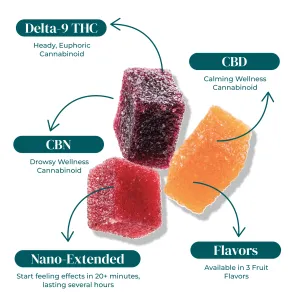
Milligrams are abstract to someone who has never taken a hemp edible before. The number on the label does not mean anything to them without a reference point. Give them one. Break your shelf into three simple tiers and coach your staff to sort customers into the right one within the first minute of conversation.
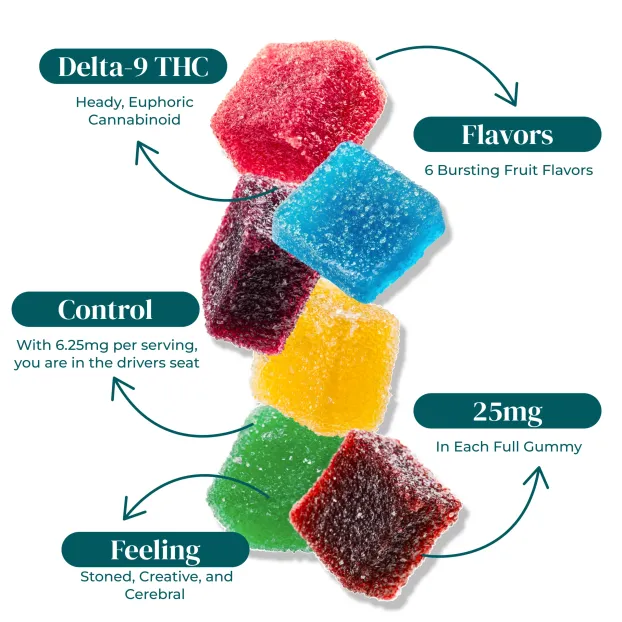
Beginner-friendly sits at 2.5 to 5mg. Everyday consumption lands around 10mg. Experienced adult consumers start at 25mg and up. Once a staff member can place a customer in the right tier in thirty seconds, the right product practically selects itself.
For anyone who has never tried an edible, the script is: start with half a gummy, wait a full two hours, and see how you feel before deciding whether to take more. That one sentence prevents most of the bad first experiences that turn new buyers into non-returners.
Instead of: “These are 25mg gummies.”
Say: “One gummy is a full experienced serving. If you are newer to this, start with half.”
Cannabinoid profile = the right product for the right customer
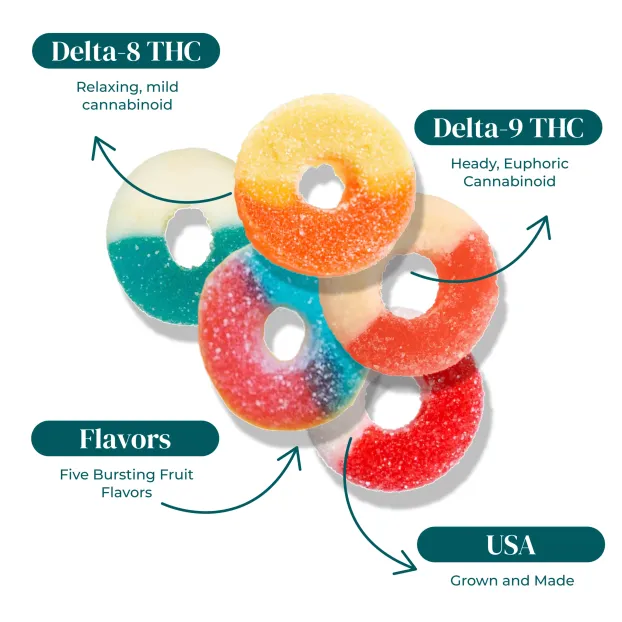
Your customers are not walking in asking for Delta-8 by molecular name. They are describing a feeling. Train your staff to listen for the feeling first and match the cannabinoid to it second. Someone who wants something mellow is often a Delta-8 customer. Classic points toward Delta-9. Non-intoxicating, just for the wind-down lands on CBD.
When a shopper cannot articulate what they want at all, leading with mellow and calm covers more ground than any cannabinoid name. Among over 10,000 Hemp Doctor customers surveyed, 18.9% of all use-case selections pointed to relaxation, making it the single biggest driver across the board.
Instead of: “This one has Delta-8.”
Say: “Customers who want something on the mellower side tend to reach for this one.”
Terpene profile = flavor and experience selling
Terpenes are where the upsell lives. Think of them as the wine-tasting notes of hemp: Myrcene reads earthy and mellow. Limonene is bright and citrusy. Pinene has that fresh, foresty edge. Staff who can speak this language move customers from a $15 cart to a $40 one, not by applying pressure but by giving the shopper something specific and accurate to respond to.
“I wish we would market more around terpene profile. Terpenes have more to do with the actual feel and flavor and high that you get than actual THC percentage.” — Clay Cram, Wholesale Sales, The Hemp Doctor
“Terpenes give us a bridge to a more wellness-focused conversation. We can talk about mood being uplifting or calming without making effects claims on the cannabis strains themselves.” — Samantha Evers, Retail Location Marketing Strategist, The Hemp Doctor
Instead of: “This is high in myrcene.”
Say: “Customers who want an earthy, mellow evening product often reach for this one.”
Extract type and ingredients = quality your customers can taste
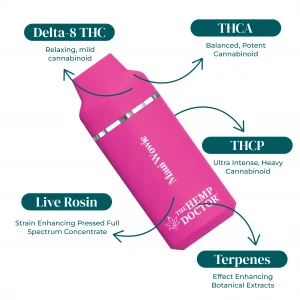
Live resin, full spectrum, distillate, solventless. Each one signals a different quality tier, and each one has a translation that lands cleanly at the counter. Full spectrum keeps the whole plant’s cannabinoid profile intact. Live resin captures the fresh-plant terpene character before it degrades. Solventless skips chemical extraction entirely, which matters to a growing number of buyers who are paying attention to how their products are made.
This is also where format matters. Your wholesale vapes selection is where extract-type translation earns the biggest ticket lift, because flavor-driven shoppers will pay the difference once they understand what they are actually getting versus what they were buying before.
Instead of: “Contains live resin.”
Say: “Offers a richer flavor profile that many customers prefer.”
COA and batch date = the trust close
This is the one that closes the skeptic. Not a discount. Not a loyalty point. A current lab report with a batch date that matches the product on the shelf. When a doubtful customer can scan a QR code and see third-party test results for the exact jar in their hand, the objection dissolves before you finish the sentence.
In a mid-2026 survey, 26.7% of Hemp Doctor customers named trust in lab testing and COA transparency as a key reason they chose The Hemp Doctor over competitors. A visible COA does not just reassure shoppers. It actively drives the buying decision. Point customers to the lab results page, hand them their phone, and let the documentation do the work.
Instead of: “It is third-party lab tested.”
Say: “Every batch has a current lab report. Scan this and see your exact jar’s results.”
The Spec-to-Shelf Translation Table
| Spec (the feature) | Instead of saying | Say this instead | Wins over |
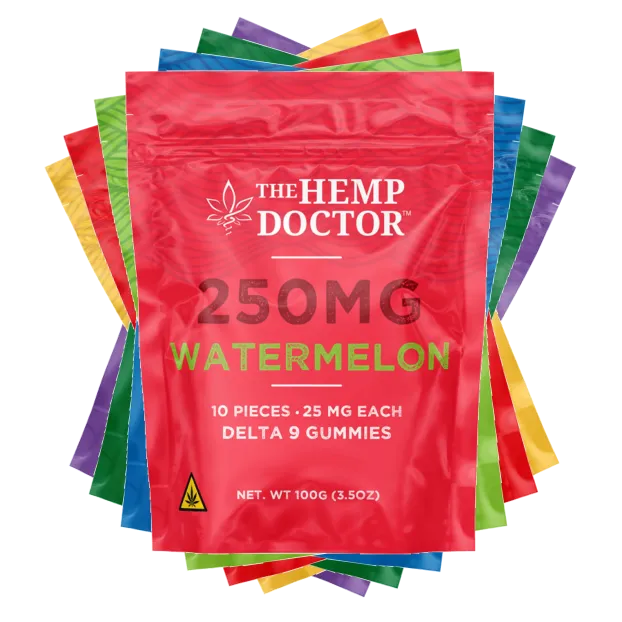
| 25mg Delta-9 per gummy | “These are 25mg gummies.” | “One gummy is a full experienced serving. Newer? Start with half.” | First-timers, serving-conscious shoppers |
| Delta-9 THC at or below 0.3% | “It is Farm Bill compliant.” | “Federally legal hemp, and here is the lab report that proves it.” | Skeptics, gift buyers |
| Contains live resin | “Contains live resin.” | “Offers a richer flavor profile that many customers prefer.” | Flavor-driven shoppers, vape upgraders |
| Myrcene-dominant terpene profile | “High in myrcene.” | “Customers who want an earthy, mellow evening product often reach for this one.” | Experience-focused shoppers |
| Full-spectrum extract | “It is full spectrum.” | “You get the plant’s full cannabinoid profile, not just one isolated compound.” | Wellness shoppers, full-plant profile fans |
| Batch dated within 90 days | “Fresh batch.” | “This jar was lab-tested last month. Here are the results for your exact batch.” | Skeptics, returning customers |
| 500mg per 30ml tincture | “500mg bottle.” | “About 16mg per dropper. A one-month supply for most customers.” | Value shoppers, first-time CBD buyers |
Ready-to-Use Talk Tracks for Your Counter
Print these. Laminate them. Put them next to the register on the first shift after you read this. Each one leads with the benefit, uses the spec as the supporting proof, and stays inside compliance guardrails your store can stand behind.
The curious first-timer. “If it is your first time, I would start with our 5mg gummies. That is a gentle starting point. Take one, wait two hours, and you will have a pretty clear idea of where you land. Every batch is lab-tested, so the serving size on the label is backed by an actual lab report, not just a claim.”
The skeptical shopper. “I hear that a lot, honestly. Everything we carry is federally compliant hemp with Delta-9 under 0.3%. There is a QR code on every jar that pulls up the lab report for that specific batch. If the numbers do not match the label, we do not stock it.”
The experienced customer trading up. “If you already like our regular distillate carts, the live resin is worth a try. Same cannabinoids, but the terpene profile is preserved from fresh plant material. A lot of our regulars who make the switch tell us they can actually taste the difference and they do not go back.”
Put Specs to Work Beyond the Conversation
The spec sheet should not live behind the counter waiting for someone to ask. The moment new inventory hits your floor, turn the data into merchandising. Print shelf talkers with the potency tier clearly labeled, Beginner, Everyday, and Experienced, so the shopper does the first sort before your staff even gets involved. Add a QR code that opens the live COA for that SKU. If your busiest budtender is with someone else, the shelf is still selling.
A laminated five-line cheat sheet at the register works harder than most training sessions. Put the top-selling SKU, its serving size, its cannabinoid profile, its terpene lead, and its current batch date on one card. New staff can reference it without stopping the conversation.
Social posts work the same way at a distance. A single spec callout paired with a lab-report screenshot routinely outperforms a generic new drop graphic because it gives someone scrolling something specific to evaluate, not something vague to keep scrolling past. Sell-through follows trust, and trust follows visible proof.
“When your staff feels equipped with the knowledge, they are so much more confident when it comes to sales. They are willing to put other things in front of customers. They are willing to cross sell.” — Samantha Evers, Retail Location Marketing Strategist, The Hemp Doctor
The Bottom Line
The retailers who are winning right now are not the ones with the most SKUs or the lowest prices. They are the ones whose staff can take a hesitant customer, ask the right two questions, and hand them the right product with a reason behind it. That skill is learnable. It starts with the spec sheet.
Every label on your shelf is a conversation waiting to happen. Your job is to make sure your team knows how to start it.
Ready to stock products whose specs do the selling for you? Open a wholesale account with The Hemp Doctor Wholesale and browse our lab results before you place your first order. Your staff will feel the difference on their first busy Saturday.