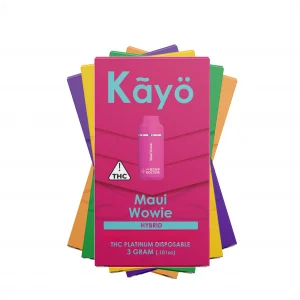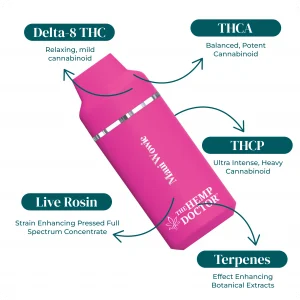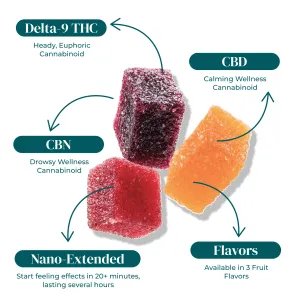

Retailers keep asking us the same question in different ways: is THCA legal to ship, and can we actually stock it without putting our license at risk? The short answer is yes, THCA remains federally legal to ship when it meets the hemp definition under current law, but the details around documentation, state restrictions, and carrier policies are where most B2B buyers get tripped up.
This guide walks wholesale buyers through what makes a THCA shipment compliant, which states currently restrict it, the paperwork every retailer should demand from a supplier, and the one regulatory change coming in November 2026 that is already reshaping how smart operators plan their inventory. Read it end to end before your next reorder.
Quick Answer: THCA flower is federally legal to ship today when it is hemp-derived, tests below 0.3% delta-9 THC by dry weight, and travels with a current certificate of analysis. That legal window narrows significantly on November 12, 2026, when H.R. 5371 replaces the delta-9-only threshold with a total THC standard.
Key Takeaways
- THCA is federally legal to ship when derived from hemp and tested below 0.3% delta-9 THC on a dry weight basis.
- Arkansas, Idaho, Hawaii, Minnesota, Oregon, Louisiana, and Wisconsin restrict or ban THCA shipments; several other states sit in gray-area enforcement.
- Every compliant B2B shipment requires a current, batch-level certificate of analysis from an accredited lab.
- H.R. 5371, signed November 12, 2025, takes effect November 12, 2026, and will reclassify most THCA flower as a controlled substance.
- Sourcing from a supplier with full compliance documentation is the single strongest safeguard for your retail license.
What Makes THCA Federally Legal to Ship Right Now
THCA, or tetrahydrocannabinolic acid, is the raw acidic precursor to delta-9 THC found in living cannabis plants. In its unheated form it is non-intoxicating, which matters because federal hemp law is written around delta-9 THC content, not total cannabinoid potential.
The 2018 Farm Bill defines hemp as Cannabis sativa L. containing no more than 0.3% delta-9 THC by dry weight. THCA flower qualifies as hemp under this standard because the delta-9 THC concentration in the raw material stays below the threshold, even when total THCA content in the same flower runs high. It is a testing standard, not a potency ceiling.
That same law authorizes the interstate transport of legal hemp and hemp-derived products. Federal agencies cannot block the shipment of Farm Bill-compliant hemp between states, which is the legal foundation the entire wholesale THCA market rests on today. State laws layer on top of this federal floor, and that is where the compliance work really begins.
Can THCA Be Shipped? What Carriers Actually Require
Can THCA be shipped through mainstream carriers? Yes, but each one handles it differently, and your supplier’s carrier relationship is a direct signal of their operational rigor.
USPS has issued formal guidance permitting compliant hemp shipments, provided the shipper keeps a certificate of analysis, or COA, on file and can produce it on request. USPS tends to run slower, and enforcement can be inconsistent at regional facilities. UPS accepts compliant hemp with documentation and, in practice, has been the more consistent carrier for hemp shippers with established accounts. FedEx publicly prohibits marijuana and hemp-derived cannabinoids in its stated policy, but its internal handling of documented, fully compliant hemp has a mixed track record, including occasional seizures.
For a retailer receiving wholesale THCA, this matters more than it might seem. A supplier that has moved hemp across carriers since 2018 has built the account history, documentation habits, and shipping protocols that keep product moving reliably. A newer supplier without that track record is a bigger inventory risk, especially as scrutiny tightens ahead of the 2026 deadline.
| Carrier | Stated Policy | Practical Reality | Documentation Needed |
| USPS | Permits compliant hemp | Slower, occasional inconsistent enforcement | COA on file |
| UPS | Allows with documentation | Most consistent for established shippers | COA + hemp manifest |
| FedEx | Publicly prohibits | Internally allows compliant hemp; seizure history | COA + hemp manifest |
Is It Legal to Ship THCA Flower? A State-by-State Overview
Is it legal to ship THCA flower into every state? No. Federal legality sets the floor, but state laws determine whether a shipment can actually be delivered, sold, or resold in your market. As a wholesale buyer, you need to verify both the origin state and the destination state before every reorder cycle.
The majority of states currently allow THCA shipments consistent with the 2018 Farm Bill. That group includes Alabama, Alaska, Arizona, California, Colorado, Connecticut, Delaware, Florida, Georgia, Illinois, Indiana, Iowa, Kansas, Kentucky, Maine, Maryland, Massachusetts, Michigan, Mississippi, Missouri, Montana, Nebraska, New Hampshire, New Jersey, New Mexico, New York, North Carolina, North Dakota, Ohio, Oklahoma, Pennsylvania, Rhode Island, South Carolina, South Dakota, Tennessee, Utah, Vermont, Virginia, Washington, West Virginia, and Wyoming. Even within permissive states, packaging, labeling, and age-verification rules can vary at the county or municipal level.
The restrictive and gray-area states are where B2B mistakes cost real money. Nebraska allows THCA in principle, but enforcement is inconsistent across jurisdictions. South Dakota’s laws continue to evolve, and Kansas regulation varies by county prosecutor. Texas is a special case: as of March 31, 2026, retail sale of hemp products containing THCA is banned, though out-of-state online shipping remains in a legal gray area through the November 2026 federal change.
| State | Status | B2B Notes |
| Arkansas | Banned | No THCA shipments |
| Hawaii | Restricted | Smokable hemp restrictions |
| Idaho | Banned | Total THC standard already applies |
| Louisiana | Restricted | Retail restrictions on inhalable hemp |
| Minnesota | Restricted | Regulated market only |
| Oregon | Restricted | Smokable hemp prohibited |
| Wisconsin | Restricted | Restrictions on certain hemp products |
| Texas | Retail banned 3/31/26 | Interstate shipping gray area |
| Nebraska | Gray area | Inconsistent local enforcement |
| South Dakota | Gray area | Evolving statute |
| Kansas | Gray area | Varies by jurisdiction |
State laws shift often, so verify local law before every purchase order. A supplier that keeps a live compliance map, rather than a static one, is doing part of that work for you.
The Documentation Every B2B Retailer Needs On File
A certificate of analysis is the single most important document in the sale of hemp products. At minimum, a COA must show delta-9 THC percentage on a dry weight basis, total THC concentration, THCA percentage, the batch or lot number, the test date, and the name of an accredited third-party lab. Missing any of these turns the document into a liability rather than a shield.
Retailers should require batch-level certificates of analysis rather than product-level ones. A supplier moving multiple harvest batches of the same strain should provide a separate COA per batch, tied to the batch number printed on the packaging. This is the standard that regulators, and increasingly carriers, expect during audits.
COA shelf life matters too. A COA older than roughly six months is a compliance risk because cannabinoid content can shift over time and testing standards evolve. Reputable suppliers refresh COAs each harvest or production cycle and make them easy to pull before you reorder.
At THD Wholesale, every SKU carries a current COA that wholesale buyers can pull directly from our lab results page before writing a purchase order. That transparency is not a marketing feature. It is the paperwork your retail license depends on if a shipment ever gets flagged.
⚠️ The 2026 Deadline: What Wholesale Buyers Must Plan Around Right Now
Here is the piece of federal law that no wholesale buyer can afford to ignore. H.R. 5371 was signed into law on November 12, 2025, and takes effect November 12, 2026. It rewrites the definition of hemp used in the 2018 Farm Bill.
The change is narrow in language but enormous in impact. Instead of measuring only delta-9 THC by dry weight, the new standard measures total THC, including THCA after decarboxylation. Any product exceeding 0.3% total THC on a dry weight basis will be reclassified as marijuana under federal law.
The practical consequence for the wholesale THCA market is severe. Current THCA flower typically tests between 20% and 30% THCA, which converts into far more than 0.3% total THC once heat is applied. Nearly every THCA flower, pre-roll, and concentrate on the market today will fall outside the new federal hemp definition, ending interstate shipment of those products under hemp law.
Until November 12, 2026, however, the current rules stand. During this 365-day grace period, THCA products that meet the delta-9 threshold retain their legal hemp status for shipping, and carriers face no federal liability moving compliant hemp. This is the closing window that every wholesale buyer should be planning around right now.
Retailers who wait until fall 2026 to secure supply will be competing for shrinking inventory at rising prices. The retailers already locking in relationships with compliant, documented suppliers are the ones positioned to sell through the transition profitably. If THCA is part of your revenue mix, now is the time to build the shelf.
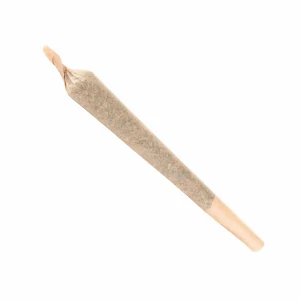
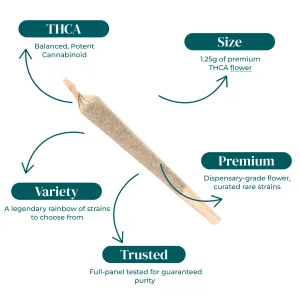
Browse THD Wholesale THCA flower and wholesale pre-rolls to plan your inventory before the window closes.
Final Thoughts: Ship THCA Legally, and Stock It While You Can
Compliance confusion is understandable in a market where federal law, state laws, and carrier policies all move at different speeds. The path forward for wholesale retailers is straightforward: source from a supplier that provides current certificates of analysis, verify state laws before every shipment, and treat documentation as part of your inventory, not a nice-to-have.
THCA is legal to ship today with the right paperwork and the right partner. November 12, 2026, is closer than most retailers think, and the buyers who act now are the ones who will profit through the transition rather than scramble through it. THD Wholesale has been moving compliant hemp since 2018, and every SKU on our shelf is backed by a live COA your team can pull in seconds.
Browse our wholesale THCA products, stock up on wholesale pre-rolls, or pull our current lab results to vet us before you order. The window is open. Use it.
Frequently Asked Questions
Is THCA flower federally legal in 2026?
Yes, THCA flower is federally legal through November 12, 2026, when it meets the 2018 Farm Bill definition of hemp. After that date, H.R. 5371’s total THC standard reclassifies most THCA flower as a controlled substance.
Can I ship THCA to any state?
No. Arkansas, Idaho, Hawaii, Minnesota, Oregon, Louisiana, and Wisconsin restrict or ban THCA, and several other states have gray-area enforcement. Always verify destination-state law before shipping.
What documentation do I need to receive a wholesale THCA shipment?
You need a current, batch-level certificate of analysis showing delta-9 THC, total THC, and THCA percentages from an accredited lab. The COA should be no more than six months old and tied to the specific batch on your invoice.
Which carrier is best for hemp shipments?
UPS tends to be the most consistent for established hemp shippers with documented compliance. USPS is permitted but slower, and FedEx has a mixed enforcement history despite internal allowances for compliant hemp.
What happens to my THCA inventory after November 12, 2026?
Product still in your possession may need to be sold, returned, or destroyed depending on state guidance issued around the transition. Retailers should track state-level implementation notices closely through 2026.
How do I verify a supplier is Farm Bill compliant?
Request current batch-level COAs, confirm they come from an accredited third-party lab, and ask how long the supplier has been shipping hemp under Farm Bill rules. A supplier operating since 2018 has the documentation history and carrier relationships that reduce your seizure and liability risk.