
Quick Answer:
Indica strains tend to deliver a relaxing, body-focused high. Sativas are usually head-focused, energizing, and euphoric. Hybrid strains land somewhere between these two worlds depending on their genetics.
When people start smoking cannabis, they’re curious to find out what the difference between the indica, sativa, and hybrid high is. A lot of the information they find online simply states that indica makes you ‘sleepy’, sativa makes you ‘energized’, and hybrid delivers a ‘mix of both’.
One result of this simplification is that customers today use these labels as shopping shortcuts. When they need help falling asleep, they ask for an indica strain. When they want to pregame for a party, they buy some sativa flower.
As a retailer, it helps to understand what actually causes these different effects. This way, you can accurately recommend your customers’ products that consistently deliver what they are looking for. After all, it’s not uncommon to find ‘indicas’ that charge you up, and ‘sativas’ that mellow you out.
This guide will break down the difference between indica, sativa, and hybrid strains. We’ll discuss the type of high each offers, show you how to explain these terms to your buyers, and more.
Let’s jump right in!
🔑 Key Takeaways
- Indica, sativa, and hybrid labels describe general effects, not guaranteed outcomes.
- THC content, CBD content, terpene profile, and personal biology shape the experience more significantly than strain category alone.
- Retailers should understand the nuances behind cannabis strain effects and how to talk to customers without overpromising or oversimplifying.
- Sativa, indica, and hybrid cannabis strains all serve distinct customer needs. A well-stocked retailer carries a varied selection of all three.
The Basics: What is Indica, Sativa, and Hybrid?
Originally, the terms indica and sativa had nothing to do with effects. They were simply botanical classifications that described the structure of different cannabis plants. Indica plants had a notably short and bushy form with wide leaves, while sativa plants grew taller, with narrower leaves. As cultivators began mixing sativas and indicas, hybrid varieties emerged, eventually becoming a popular choice among many users.
Over time, most buyers noted that indica-leaning flower often produced more sedating effects, while sativa strains tended to be more upbeat and uplifting. This became a widely accepted anecdote, and the labels stuck.
Today, these are the shorthand terms most customers use to describe the type of high they’re going for. This means that, as a retailer, they’re still useful, especially when categorizing your inventory.
However, a 2021 study published in nature plants shows that these terms aren’t accurate predictors of effects. We’ll discuss more of this in detail later.
What Is an Indica High?
An indica high mostly feels like intense physical relaxation. The experience primarily focuses on muscles, limbs, and other parts of the body rather than on mental effects. Many people report feeling a peaceful, calming sensation, and at higher doses, drowsiness and sedation.
Couch lock is commonly associated with indica effects. This makes them ideal for nighttime use, when you want to unwind after a long day at work. Its physical effects also make it suitable for dealing with bodily discomfort, while its sedating effects make it the perfect kiss goodnight.
If your customer is looking for cannabis, they can smoke while lounging on the daybed, watching old movies, indica is the strain category for them.
What Is a Sativa High?
Sativa effects are mostly head-focused. Instead of physical sedation, one experiences a surge of mental clarity, creative focus, inspiration, and euphoria. This makes sativa strains popular among daytime users who want to remain productive, be friendly at social events, be creative at work, or stay active during workouts.
Many users report having sharper thoughts and feeling more engaged after smoking sativa flower. Keep some on hand for customers who want a kick of motivation.
| You’ll Want to Read Top 10 Sativa Strains 2025 (The Hemp Doctor Customers’ Most-Loved Picks) |
What Is a Hybrid High?
The hybrid effect lands somewhere between mental euphoria and physical relaxation. However, the side they lean on will depend on whether the strain is balanced, sativa, or indica-dominant.
While balanced hybrids strike the perfect balance between these two worlds, sativa-leaning hybrids are typically more energizing than relaxing. Indica-dominant strains, on the other hand, will relax your muscles while delivering hazy cerebral effects.
Hybrid cannabis strains are ideal for first-time buyers who still don’t know what their preference is. They’re also for those who want a strain they can smoke across various situations, not just at nighttime or daytime.
Common hybrid high effects include: balanced high, moderate body relaxation, mental engagement, flexible feel.
Indica vs Sativa vs Hybrid: Quick Comparison
| Indica | Sativa | Hybrid | |
| Typical effects | Relaxing, sedating, body high | Uplifting, energizing, head high | Balanced, moderate effects, both body and mind |
| Best time of day | Evening, night | Early, mid-morning | Flexible, anytime |
| Customer mindset | Unwind, relax, sleep | Active, social, creative, productive | Versatile, everyday use |
| Potency consideration | High THC indicas can be overwhelmingly sedating | High THC sativas often cause anxiety in sensitive users | Easier entry point for beginners |
| Retail use case | Evening shoppers, relaxation-focused | Daytime shoppers, productivity-focused | Flexible shoppers, first-time buyers |
Why Strain Labels Don’t Tell the Whole Story
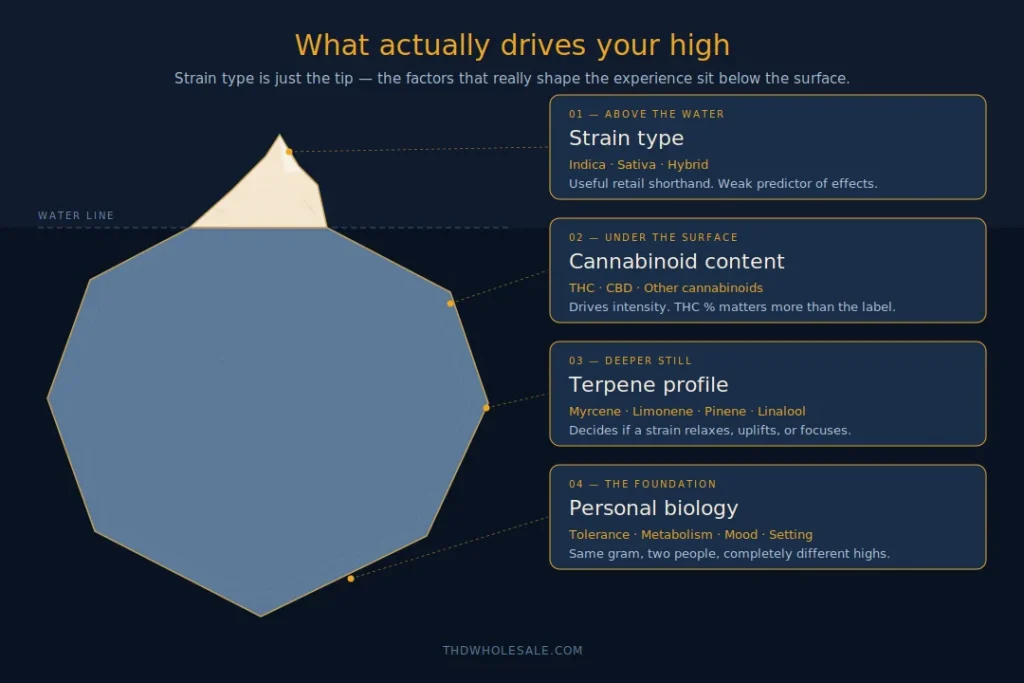
While strain type is a useful place to start from, it isn’t a reliable predictor of effects on its own. Several factors determine whether a strain delivers physically relaxing, mentally uplifting, or balanced effects. When we choose to die on the indica vs sativa vs hybrid hill, we fail to account for all these three factors: terpenes, cannabinoid content, and individual biology.
Cannabis is a complex, dynamic plant. When you understand all its nuances, you can have more insightful, accurate conversations with your customers and recommend products that always get the intended job done.
Here’s what you need to know.
The Role of Cannabinoids: THC Content Drives Intensity
THC content is the biggest driver of how intense cannabis strain effects feel. As a rule of thumb, the more THC a strain contains, the harder its high is going to hit. It’s, therefore, possible for a high-THC indica to feel more intense and overwhelming than a low-THC sativa.
CBD content also plays a huge role, usually helping to balance out the intensity of THC. The result is a smoother, more manageable cannabis experience. When you understand how our bodies react to THC, you’ll be able to recommend strains that fit what your customers are looking for.
The Role of Terpenes
Terpenes are the special compounds that give different cannabis strains their bold, unique flavors and scents. When consumed with THC, CBD, and other chemicals, they contribute to the entourage effect— the holistic, synergistic way these compounds interact.
Terpenes can also contribute directly to cannabis strain effects. For example, myrcene, an earthy, musky terpene, is reported to have sedating effects, while limonene, a bright, zesty terpene, is invigorating and uplifting.
As a retailer, you ought to pay attention to terpene profiles when stocking products. This is a way more accurate effect predictor than strain profile alone.
Individual Biology and Tolerance
Two people can smoke the same amount of the same exact strain and have completely different experiences. Body weight, metabolism, personal tolerance, and other biological factors influence the type of high you have when you smoke cannabis.
That’s why dispensary staff should never guarantee a customer that a certain strain type would deliver a specific experience.
How Retailers Can Use Strain Categories Without Overpromising?
Strain categories are useful tools for organizing your retail categories. They also help customers familiarize themselves with your menu, act as a shared vocabulary every stakeholder can use, and make product selection feel manageable. But the way you explain these terms to your customers matters.
Some Phrases to Avoid
- “This indica will make you fall asleep.” This is too definitive and may not always be accurate
- “This sativa will give you a burst of energy.” This can backfire for anxiety-prone customers, especially if it’s high in THC.
- “Hybrid gives you the best of both worlds.” This is vague and doesn’t actually guide your customers towards making a decision.
What Works Better
- “This indica-leaning strain is popular among customers who like smoking in the evening to wind down after a long day at work.” This option immediately expresses a use case.
- “This sativa-leaning option is common among people who prefer a more upbeat, daytime cannabis experience.” This communicates effects and use cases at once.
- “This indica-leaning hybrid is a good starting point when you want physical relaxation without feeling overwhelmed with sedation. Delivers a subtle, balanced high.” This is more detailed, which helps customers make decisions.
One tip Clay Kramm, who handles wholesale sales at The Hemp Doctor, passes along to every new wholesale partner during onboarding: train your budtenders to ask two questions before recommending anything.
“First, what time of day do you plan on using this? Second, have you smoked something similar before, and did you like it?” Clay says. “Those two answers tell your staff more than any indica or sativa label on the jar ever will. It also keeps the conversation customer-led, which keeps it compliant.”
While these changes seem subtle, they’re absolutely necessary. By describing customer behavior rather than making promises, you remain compliant, set realistic expectations, and give your customers the chance to make their own decisions.
Your budtenders can ask “What time do you plan on smoking?” and “What kind of experience are you looking for?” This way, they can recommend products that actually deliver these effects, rather than gambling on the indica vs sativa vs hybrid angle.
| You’ll Want to Read Dispensary Customer Engagement Tips That Turn Browsers Into Buyers |
Building Your Retail Shelf Around Strain Categories
A well-stocked dispensary carries high-quality, potent, and lab-tested products across the three strain categories. No two cannabis users are exactly alike, so it helps to stock items that serve different kinds of shoppers.
Clay has noticed a clear pattern in reorder data: the accounts that consistently restock are the ones carrying a balanced split, typically a roughly even mix between indica-leaning and sativa-leaning flower, with hybrids filling out the rest of the shelf.
“Shops that go too heavy on one category usually leave money on the table,” he explains. “If your whole flower wall is indica because it sells well at night, you’re losing the morning and afternoon walk-ins. The customer mindset shifts throughout the day, and your shelf has to match it.”
Customers who want to unwind, relax, or get some sleep support will come in asking for indica products. They have a hard time falling asleep, so they’d rather stay away from cannabis strains that make them feel anxious and wired.
Other customers like to smoke right after waking up, opting for cannabis strains that will energize and motivate them. They don’t want to feel weighed down, so they tend to avoid heavy indica products.
On the other hand, everyday users will typically want something they can smoke any time, any day. Not too physically intense or mentally invigorating. Hybrid cannabis strains work perfectly in this scenario, as they deliver a balanced effect profile. And when you get a customer who’s not sure what they like, point them in the direction of a good hybrid— problem solved!
Indica, Sativa, and Hybrid in Hemp and Other Products
When buying flower and products derived from hemp flower, you’ll notice that they’re classified the same as traditional cannabis products. If you come across indica, sativa, or hybrid labels when shopping for flower, expect similar effects.
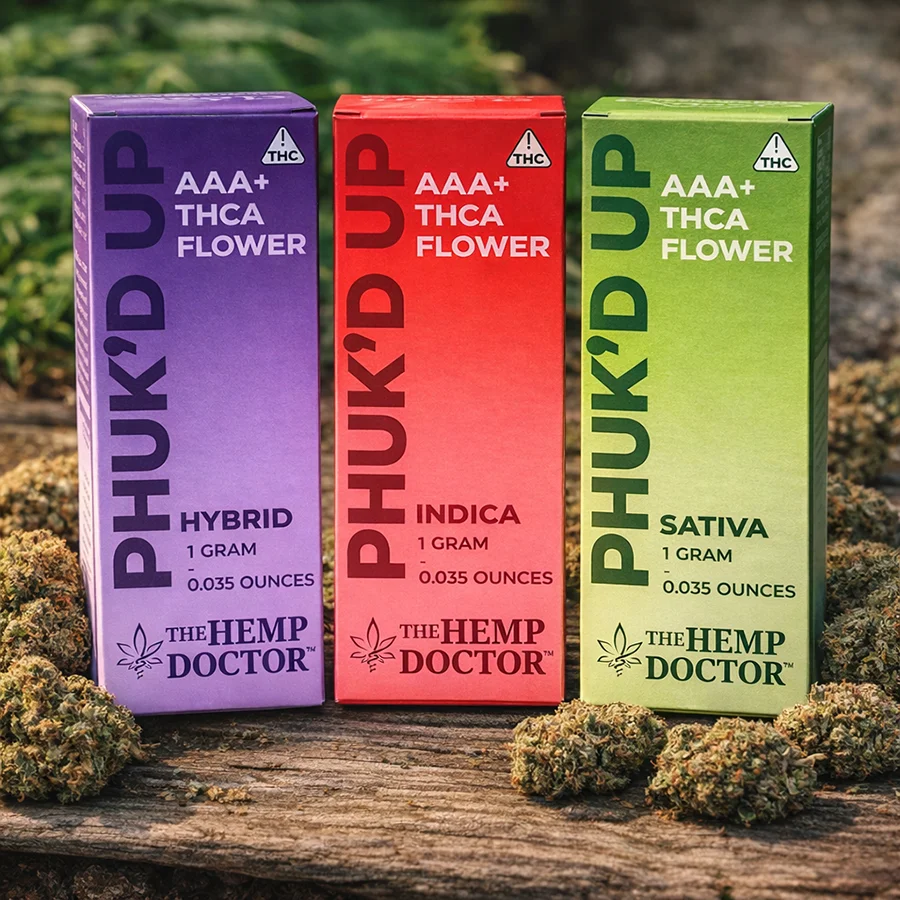
At THD Wholesale, we sell flower and infused products with strain options across indica, sativa, and hybrid categories. That said, our published Certificates of Analysis ( COAs) include THC and CBD content, as well as any relevant information to help the customer make a decision.
If you follow a similar framework, it will become much easier for customers to match products to their use intent. Just like that, you’ve reduced buyer friction, and would-be confused shoppers become paying customers.
Final Thoughts
The most effective cannabis retailers don’t rely only on indica vs sativa vs hybrid markers. This information is useful, but it’s best to treat it as a starting point, not the entire destination. Understand the role potency, terpene profile, product format, dosage, and personal biology have to play in cannabis strain effects, and you’ll have an easier time guiding your customers.
Ready to build your product inventory? Browse flower selection and curate an assortment of indica, sativa, and hybrid cannabis strains that will serve every customer who walks through your door.
FAQs
We’ve covered the difference between indica, sativa, and hybrid weed. Now, let’s answer other questions new cannabis users often ask.