
The problem with buying weed in bulk is that, unless you store it well, its cannabinoids and terpenes degrade. The result is lower potency and a less appealing fragrance and taste. Mold is another big concern; left unchecked, the humidity in your warehouse could cost you your entire inventory.
This is a huge headache for small business owners and inventory managers alike.
That’s why we’ve put this two-part guide together— to share tried-and-tested industry secrets on long-term pot storage in cannabis warehouses and retail storefronts.
Keen to offer valuable, real-world insights, we spoke with Chloe Morisson from our warehouse operations and Samantha Evers from our retail team. They shared practical tips about extended cannabis storage that are sure to be a game-changer for you. Ready? Let’s figure out the best way to store cannabis!
🔑 Key Takeaways
- Maintain warehouse temperatures at 60–69°F, and humidity at 57–62%.
- Keep dispensary temperatures at 60–79°F, and humidity at 50–65%.
- Use UV-blocking films on warehouse windows to protect cannabis from light degradation.
- Vacuum-sealed Mylar bags are durable, opaque, multi-layered, and perfect for long-term storage.
- Make sure your dispensary or warehouse is compliant with state regulations.
- Dispensaries and warehouses must use inventory tracking software.
Why Bulk Cannabis Flower Storage Requires a Different Approach?
Storing a quarter pound of weed is easy. Just place it in containers, throw in some humidity packs, and you’re good to go.
Figuring out the best way to store bulk cannabis is an entirely different challenge, especially when you’re dealing with an entire harvest. At this level, storage mishaps don’t just cost you a couple of hundred dollars. If your warehouse has, say, 200 pounds of weed in inventory, and something happens to it in storage, that’s hundreds of thousands of dollars in losses!
It is, therefore, important for inventory managers to store their stock professionally. These days, most customers want to smoke the most potent, aromatic, and resinous flower they can find. Following proper storage practices will ensure your dispensary’s supply always makes the mark.
Another expectation most customers have is that the dispensary’s inventory will remain consistent over time. Imagine you’ve found a perfectly terpene-rich cut of OG Kush at your favourite weed store, and are excited to order it again. However, the second time around, you receive an eighth so lifeless you’re tempted to host it a quick funeral. Seasoned stoners know how infuriating that can be!
That’s why a store manager’s work is so crucial.
By utilizing the same storage techniques on the entire harvest, they ensure the strain’s potency, flavour, and scent remain consistent throughout. That’s the kind of thing that’s easy to take for granted, but it becomes painfully noticeable when not done right.
Finally, there’s the legal side to consider. Storing large amounts of cannabis means staying on top of your state’s regulations; make sure you’re not exceeding possession limits or violating any storage laws. So, even though you’ll follow many of the same principles, you’ll find that warehouse and retail cannabis storage is quite different from storing bulk quantities for personal use.
Best Way to Store Cannabis Long Term
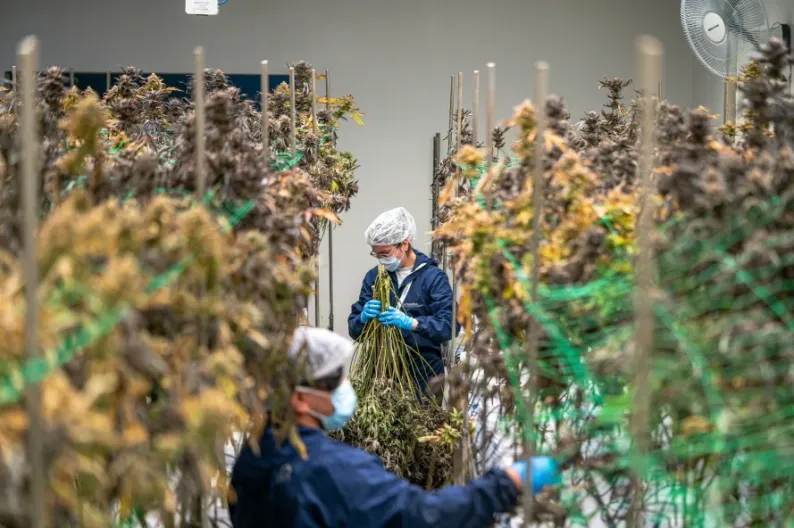
To store cannabis flower in a warehouse, you first must understand the challenges you’re up against. You’ll need to protect your inventory from moisture, air exposure, and humidity and temperature fluctuations.
Optimal Storage Conditions
Cannabis is delicate and sensitive to environmental changes. If you’re looking for the best way to store cannabis flower, consider the following:
Temperature (Ideal: 60–69°F or 15-20°C)
Cannabis loses about 16% of its present THC when stored for a year, with high temperature being the main culprit. High temperatures also create a breeding ground for mold and mildew.
🎙 Warehouse Expert Spotlight: Chloe Morisson
To achieve the ideal temperature for long-term cannabis storage in the warehouse, here’s how our experienced warehouse manager (Chloe) controls temperature:
- Using Sensors to Monitor Temperatures
Place sensors in different corners of your warehouse to create a temperature map. A warehouse likely doesn’t have uniform conditions. There may be cool air pockets near a vent, higher temperatures under a light, and areas in your warehouse that get no airflow at all.
Ensure your sensors are placed at different heights, at HVAC supply and return vents, in vaults or storage rooms, and near doors.
- Insulating the Warehouse
A well-insulated storage space will not experience temperature fluctuations. This insulation is installed in walls, ceilings, floors, and around storage vaults. Proper insulation protects your HVAC unit from overload, ultimately reducing energy costs. It also creates a stable internal environment, making it essential for long-term pot storage.
- Intentional Equipment Placement
Some of the equipment you’ll find in a cannabis warehouse may generate heat, like lighting systems and IT infrastructure. Equipment used to decarboxylate flower or extract cannabinoids also produces a lot of heat.
Arrange your warehouse such that this equipment isn’t close to your cannabis. Otherwise, it will show significant degradation in a very short time.
- Using Commercial HVAC Systems with Precise Controls
If you’re wondering how to keep pot fresh for a long time in a warehouse, the answer is large-scale HVAC units. These robust climate control systems deliver industrial-grade heating, ventilation, and air conditioning, making them ideal for large-scale cannabis storage facilities.
Commercial HVAC units provide precise temperature control down to 1-2-degree increments, allowing you to adjust conditions in your warehouse to match your real-time needs.
Humidity (Ideal: 57–62%)
Humidity refers to the content of water vapor in the air. Relative humidity changes with temperature: at higher temperatures, the air can hold more water vapor, and vice versa. When the air is too moist, cannabis is susceptible to mold. When the relative humidity is too low, the weed gets brittle and dry.
Proper humidity control is crucial for extending your cannabis inventory’s shelf life. We recommend maintaining a relative humidity of 57–62% in your warehouse. (60–65% during curing)
For perfect humidity control:
- Use Automated Monitoring Systems
Manually monitoring humidity may be impractical, especially in a large warehouse. An automated system monitors relative humidity and automatically adjusts your equipment to maintain the targeted levels.
You don’t have to reset manually every time someone opens a window or the weather changes. By responding in real time, an automated humidity monitoring system ensures your flower don’t bear the brunt of the lags associated with human oversight.
- Invest in Humidifiers and Dehumidifiers
The environment often has conditions unfavourable for long-term pot storage. Having high-quality humidifiers and dehumidifiers lets you artificially control humidity levels.
These commercial-grade machines remove or add moisture from warehouse air on a large scale. There are various kinds of humidifiers and dehumidifiers. Before investing in one, consider the climate, your warehouse size, and your budget.
- Use Hygrometers to Monitor Relative Humidity in Real Time
Hygrometers measure relative humidity in real time, providing the vital data you need to configure your humidity control strategy. Think of them as the eyes of the entire system: they give you accurate readings, ensuring you don’t operate blindly.
These are the most common types of hygrometers used in warehouses:
- Digital hygrometers
- Analog hygrometers
- Psychrometers
- Chilled-mirror hygrometers
- Invest in Humidity-Controlled Storage Vaults
When you have a large footprint, maintaining consistent humidity levels throughout the warehouse is challenging. And with variables like opening doors and turning on equipment, fluctuations in relative humidity occur more often than not.
Humidity-controlled storage vaults eliminate this problem. These sealed rooms have vapor barriers, insulation, airtight sealing, and independent temperature and humidity control systems. They make it much easier to create the stable microclimate you need for long-term pot storage.
Ventilation & Air Circulation
Too little circulation turns the room into a stuffy, humid air swamp, making your weed susceptible to mold. Too much and your bud gets weathered and dry. Proper ventilation ensures heat is distributed evenly in the warehouse.
Remember, hot air rises, and cool air sinks. If there’s no circulation, air stratifies, creating two separate microclimates. Here’s what Chloe thinks you should do to improve ventilation and air circulation:
- Cannabis Needs Higher Air Changes Per Hour
Air Changes Per Hour (ACH) is a measure of the number of times all the air in a warehouse has been completely replaced or recirculated in an hour. Cannabis storage requires 20–40 ACH, nearly four times the typical storage warehouse rate (5–10 ACH).
More ACH helps remove odors, prevent moisture stratification, and clear the ethylene gas cannabis releases during curing. Higher ACH also removes stagnant air, which promotes mold growth. We recommend 30 ACH, which means the room would be getting a fresh supply of air every 2 minutes.
- Implement a 100% Air Recirculation Strategy
Residential ventilation systems are designed to exchange air. Stale indoor air is exhausted to the outdoors and replaced with fresh outdoor air. A warehouse dedicated to long-term pot storage works differently. Rather than venting air out, indoor air is filtered, conditioned, and continuously recirculated throughout the facility.
You see, cannabis plants release significant amounts of CO2 during curing. Elevated CO2 levels displace oxygen and hinder the growth of aerobic mold. By recirculating air, warehouses retain this protective CO2 while maintaining stable environmental conditions.
And since warehouse managers pump additional CO2 into the air, recirculation preserves this costly input.
- Use Industrial Circulation Fans
Even with a robust HVAC unit, air doesn’t distribute itself evenly. When you’re managing a large cannabis storage warehouse, industrial circulation fans will get this job done. There are large-scale fans designed to move thousands of cubic feet of air every minute.
If you don’t want dead zones that collect pockets of air, circulation fans are the top choice. That said, don’t point them directly at your inventory, as this will dry it out faster.
- Proper Ductwork is Essential
Ducts are a crucial part of the ventilation system: they transport treated air throughout the facility. Without ductwork, all air is dumped in one location and left to distribute itself.
A properly designed duct system directs cool, fresh air to all corners of the warehouse, helping maintain a consistent draft, humidity, and temperature.
- Consider Advanced Air Sanitization Systems
In most homes, the air filter catches floating particles, but it doesn’t neutralize contaminants. When you’re storing cannabis long term in a warehouse, advanced air treatment is non-negotiable.
Consider investing in a high-efficiency HVAC system that actively destroys mold spores, viruses, bacteria, and pathogens. Besides protecting your flower from contamination, these systems also neutralize volatile organic compounds like terpenes, which will help keep the weed smell down.
- Get a High-Rated Air Filter
If you’ve changed the air filter in your home, you’ve encountered the MERV rating. Short for Minimum Efficiency Reporting Value, the MERV rating measures the effectiveness of air filters in capturing airborne particles. The MERV scale ranges from 1 to 20—a higher figure indicates a higher efficiency level, capturing even smaller particles. Here’s what we mean:
| MERV Rating | Particle Size | Particle |
| MERV 1 – 4 | +10 microns | Basic protection against dust, lint, and other large air particles. |
| MERV 5 – 8 | 3 to 10 microns | Residential-grade filtration, including pollen and dust mites |
| MERV 9 – 12 | 1 to 3 microns | Higher-grade protection from mold spores, hair spray, and common air contaminants. |
| MERV 13 – 16 | 0.3 to 1 micron | Hospital-level filtration: tobacco smoke, sneeze particles, and microbial contaminants. |
| MERV 17 – 20 | 0.3 microns and smaller | Viruses, ultra-fine spores |
Light Protection
When exposed to UV rays from the sun, THC— the psychoactive compound— is oxidized into CBN, a cannabinoid with 10% of THC’s psychoactive potency. This chemical is known to have sedative properties, which explains why most people feel sleepy when they smoke aged cannabis.
Placing cannabis in direct and indirect sunlight leads not only to significant potency loss but to a terpene breakdown as well. This results in a less pungent aroma and flavor. If you don’t want your cannabis to lose more than 30% of its present THC in 3 months, these tips will come in handy:
- Use Windowless Storage Vaults
Windows are great for a beach house escape, but they’re a nightmare for long-term pot storage. Besides introducing cold air, insects, and other variables, they also let in UV rays from the sun. Go for windowless storage rooms to eliminate the risk of light penetration.
- Install UV-Blocking Window Films
If the space you have available already has windows, UV-tinted films are the perfect solution. These films stick directly onto glass windows and are specially designed to filter out UV rays from the sun. They’re, therefore, able to protect your inventory from light penetration without eliminating all light from the warehouse. And if you’re looking for complete light rejection, you can go for blackout window films.
- Use Opaque Storage Containers
When you can’t install UV-rejection films, using opaque storage containers is the next best bet. These containers are made using materials that block all light transmission. Such storage containers include metal cans, amber mason jars, and more.
Warehouse managers use these techniques to control humidity fluctuations, temperature changes, air ventilation, and light penetration.
Now, let’s break down what Chloe swears by when it comes to long-term weed storage.
Best Storage Methods and Containers
Being in charge of storing lots of bud may make you feel intimidated. Chloe says there’s no need to be, and offers the following tips:
- Use Vacuum-Sealed Mylar Bags
Mylar bags are the holy grail of cannabis storage. These are multi-layered bags made from metalized polyester film. They usually have a plastic layer, an aluminium foil layer, and a polyethylene layer, creating a strong and durable barrier to air, moisture, and light.
Before sealing, add some humidity packs in there and use the gentle vacuum setting to remove air from the bag. (Intense vacuuming can crush trichomes.) Chloe recommends “Use Boveda (now sold as Vivi) or Boost Packs that maintain 58% or 62% RH.”
- Use Food-Grade Plastic Bins
While you can store weed in food-grade plastic bins, they are ideal for short- to medium-term storage. (1–3 months). Most dispensaries use them to sort flower before packaging it. Made from High-Density Polyethylene, these bins are typically opaque, UV-resistant, and BPA-free, protecting your inventory from light penetration. Regular plastic containers off-gas chemicals and transfer odors to your cannabis, so make sure you only use food-grade bins.
- Metal Bins Work Well, Too
You could also store your cannabis in airtight metal containers. Made from aluminium or steel, this is a durable and effective way of protecting your inventory from air and light exposure. However, some metal containers soil the rich cannabis flavour, so keep an eye out for that.
- Try Nitrogen Flushing
Vacuum-sealing prevents oxidation by removing air from the bag, but trace amounts of oxygen remain. Nitrogen flushing does a much better job at this by displacing all oxygen.
This technique extends cannabis shelf-life significantly, making it the best way to store bulk cannabis for up to 24 months.
- Organization is Key
Using a First In, First Out system will ensure older stock moves before newer products. This system will prevent inventory from degrading while sitting forgotten behind fresher batches.
To accomplish this, however, you’ll need a thorough organisation strategy. Label everything: strain, harvest date, batch number, weight— everything.
We also recommend using dark-tinted UV mason jars to store smaller batches within the warehouse. This way, you won’t have to keep opening a large bag of weed to pull out a couple of grams. The less oxygen exposure your inventory gets, the better.
Long-Term Bulk Cannabis Storage Errors to Avoid
Look out for these common pitfalls:
- Dismissing Indirect Light Exposure
Don’t forget that even indirect light degrades THC. That’s why we recommend installing UV-blocking films in your warehouse or using amber-coloured glass jars to store your weed.
- Oxygen Exposure Due to Excess Handling
Handling your inventory too frequently exposes it to oxygen. While it’s crucial to examine cannabis for mildew and mold, make sure you’re not opening containers too often. We recommend maintaining a cool, dark environment at all times.
- Overpacking Bags
When you put too much cannabis in one bag, the pressure crushes trichomes, and the volatile terpenes inside them begin evaporating immediately. Your weed starts degrading in quality before it even goes into long-term storage.
- Poor Inventory Rotation
You should have strict rotation discipline, carefully tracking product to ensure older batches move before newer harvests. Proper inventory rotation will require specialized labelling and shelving, plus staff training, but it’s absolutely worth it.
- Storing Near Heat Sources
As we mentioned earlier, storing your weed near heat sources is not ideal. Heat accelerates cannabinoid degradation aggressively, decarboxylating weed before your customers have had the chance to smoke it. Ensure your inventory is as far as possible from HVAC units, electrical panels, server rooms, and water heaters.
Compliance and Documentation Considerations
As a warehouse manager, how to keep pot fresh for a long time isn’t all you have to consider. Every state has regulations for extended cannabis storage that you must adhere to. Let’s discuss some of them.
Batch Tracking (From Receipt to Distribution)
Traceability is at the heart of compliance. Assign a unique identification number to everything the moment it arrives at your warehouse. Doing this makes it easier to track each batch as it moves through inspection, quality testing, changes in store location, repackaging, and final distribution.
Temperature & Humidity Logs
You may be required to log the humidity and temperature in your warehouse. This way, regulators can ascertain that the cannabis you sell was stored under optimal conditions, protecting consumers from mold-ridden bud.
Security Access Protocols
Some states require cannabis to be stored in a secure, locked vault that only authorized personnel can access. You should only open this storage location when retrieving or replacing stock, and lock it immediately after.
Additionally, your warehouse should have a thorough surveillance policy, with video cameras in all rooms where you store and handle cannabis. The area outside the warehouse should also be well-lit and under surveillance.
Quality Control Testing Schedules
Long-term cannabis storage doesn’t mean that the weed sits there untouched for as long as it takes to sell. Warehouse managers must test products frequently to ensure their potency, moisture content, and microbial levels are still acceptable.
You should time your testing schedules depending on how long the cannabis will be in storage. For example, for stock lasting three to six months, check one and a half months later, and again after three months.
Chain of Custody Documentation
This documentation proves that the product was handled only by authorized personnel at every transfer point and accounted for at all times. Every hand-off must be documented, from initial arrival through storage, processing, and final distribution.
This rigorous documentation ensures cannabis isn’t diverted into illicit markets. That’s why regulators take gaps in the chain of custody very seriously.
Varying State-Specific Regulations
We must mention that different states have varying rules for long-term cannabis storage. Read the laws applicable to your state regularly. This way, you’ll be aware of changes as soon as they occur, and can get compliant immediately. Remember, ignorance of the law is no defense.
Dispensary & Retail Best Practices for Cannabis Flower Storage

Keeping cannabis fresh in a dispensary requires a dynamic, customer-focused approach. It differs significantly from warehouse inventory management, which is typically static and bulk-oriented.
In a dispensary, inventory must remain not only fresh and compliant, but also immediately accessible to customers. We spoke to Samantha Evers, and here’s what she said about storing weed in a retail dispensary.
Optimal Storage Conditions
Most retail dispensaries have a backroom to store their bulk supply. However, they also keep a significant amount of flower in their front room. Let’s examine the best storage conditions for these two areas:
Backroom Storage
Conditions in your backroom should be controlled, pretty much mimicking a large-scale cannabis warehouse. That means high security, controlled humidity and temperature, and more. Here’s a quick breakdown:
| Element | Ideal Levels |
| Temperature | 60–68°F, maintained consistently. |
| Humidity | 58–62% RH, maintained with automated monitoring and humidity packs. |
| Light | Zero light exposure is accomplished using windowless vaults, UV-blocking containers, and opaque storage tubs. |
| Oxygen | Minimal air exposure is accomplished by keeping the weed in airtight containers until it’s transferred to the front. |
Having a thorough monitoring system or schedule is the best way to store cannabis in a retail dispensary’s backroom. Failure to do this will lead to inconsistencies in batch flavour, quality, potency, and fragrance.
Front Room
When it comes to cannabis storage, few areas are as challenging as the sales floor. That’s because conditions are constantly changing: customers opening the door, body heat causing temperature fluctuations, etc. Humidity control is tough, too, and direct sunlight is a huge hurdle. Here’s how experienced store managers handle this:
- Separating Display Stock from Sellable Inventory
Keep only a small amount of flower on your display rack and the rest in the back room. Weed that stays out in the open degrades quickly, so selling that would be giving your customers the short end of the stick.
When you separate display stock from sellable product, customers can inspect the flower without compromising your entire inventory.
- Managing Humidity
Since humidity control is difficult, many retailers use sealed display shelves to provide a stable environment for cannabis storage. When you pair this with airtight containers and humidity packs, you protect your stock against humidity fluctuations.
- Preventing Light Degradation
The front of your dispensary can’t be as dark as your backroom. Besides direct sunlight, the fluorescent bulbs in your dispensary may also emit UV rays. You’ll, therefore, need some tinted mason jars or opaque metal containers.
- Proper Handling To Limit Oxygen Exposure
Customers will always ask to smell or visually inspect different strains before they buy. Every time you open a jar, fresh oxygen is introduced, and oxidation occurs. That’s why proper handling is so important. Keep samples of different strains in small jars rather than pulling out the entire stash every time someone asks for a smell test.
- Staff Training
A well-trained staff is the last line of defense against quality loss when storing cannabis in a retail dispensary. You could have the best equipment in the world, but it’s useless if your team doesn’t understand the importance of proactive quality control.
Make sure every budtender remembers to reseal every jar they open, even when the sales floor is busy. Otherwise, you risk significant degradation across hundreds of daily transactions.
Best Storage Methods and Containers for Displayed Cannabis
Most dispensaries use clear mason jars to store weed in the front. These are ideal because they allow budtenders to show customers how a strain looks while keeping the lid closed. Amber-tinted mason jars are popular, too.
At the Hemp Doctor Wholesale, we use Chubby Gorilla containers. Tough, tamper-resistant, airtight, and child-safe, these containers were specifically engineered for long-term cannabis storage. Just place them in a cool, dark spot, and there’s literally no room for error.
🛍 Retail Expert Spotlight: Samantha Evers
Common Mistakes to Avoid
Samantha lists the mistakes many people make when tasked with weed storage at a retail store.
- Handling the Jars Roughly
You don’t need to shake the jar so that you can get a better look at all the buds in the jar. If you’d like to conduct a thorough visual inspection, it’s best to remove each bud individually. Agitated buds cause trichomes to dislodge, leading to the loss of terpenes and cannabinoids.
- Using Plastic Bags
Mylar bags are great for cannabis storage, but plastic Ziploc bags? Not so much. They aren’t airtight, so oxygen can move in and out of them, causing THC degradation. The static from plastic also dislodges trichomes, accelerating potency loss even further.
- Refrigerating Cannabis
In some instances, cannabis flower can be placed in the freezer to preserve trichomes for cannabinoid extraction. However, refrigerating cannabis isn’t recommended. Temperature and humidity levels aren’t static in a refrigerator. Condensation may also occur, leading to mold and mildew growth.
- Poor Inventory Rotation
The First In, First Out system is crucial at the dispensary level. When you don’t have a working framework, older batches sit untouched in the back, while new inventory flies off the shelf. Eventually, tens of pounds of old weed that doesn’t smell, taste, smoke, or hit the same will remain. You’ll likely be forced to discount this flower, leading to losses. If you don’t want to deal with this, put a proper tracking system in place so old stock goes out first without fail.
US Compliance and Documentation Considerations for Storing Cannabis in Stores
The law across nearly all states requires cannabis dispensaries to store their inventory in a vault or safe room. This area should remain locked at all times, except when weed is being retrieved or restocked.
At a glance, here’s a list of other compliance considerations regulations to know:
High-Quality Surveillance Systems
Dispensaries must install high-quality CCTV cameras to capture all the movement inside and around the store. All areas where cannabis is stored, handled, and prepared for transportation have to be recorded.
You’re also required to maintain CCTV footage for a duration that varies depending on your location.
Regulated Inventory Access
Only approved individuals can enter cannabis storage areas, and their access should be logged whenever they do. These areas should also have clear signs instructing unauthorized individuals not to enter.
You’ll Need a Perimeter Alarm System
As a security measure, your dispensary must have an automated alarm system that’s monitored professionally. You should regularly inspect these alarms and other security equipment to ensure they’re in good working order.
Tracking & Documentation
In every state where cannabis is legal, dispensaries are required to use BioTrack, Leaf Data Systems, Metrc, or another approved software to track inventory from seed to sale. Every single transfer must get logged.
Nighttime Storage Protocols
Most states don’t allow cannabis products to remain on the sales floor overnight. Before closing shop for the night, flower should be returned to the backroom, vault, or other storage area. This rule is enforced both for security and access control.
Incident Reporting
If any theft, inventory discrepancy, security threat, or diversion happens at your dispensary, you’re required to report the incident to state regulators as soon as possible. A written incident report should follow within 10 days, detailing what happened and the corrective measures you took.
Transportation & Delivery Compliance
Products in transit must have an accompanying travel manifest indicating their SKUs and the recipient’s information. The driver must update this ledger after each delivery to ensure it reflects the vehicle’s current inventory. In most states, the delivery staff must be employed by the dispensary, not outsourced from third-party delivery companies.
Remember, compliance requirements vary significantly by jurisdiction. What’s legal in Colorado may violate Pennsylvania law. Check your state’s specific cannabis regulations to understand the rules that apply to you. Finally, stay current with your state cannabis control board for updates, because the legal cannabis landscape changes often.
Warehouse vs Store Storage: Key Differences at a Glance
Warehouses and dispensaries both need proper storage, but how you handle it in each setting is completely different. Take a look:
| Category | Warehouse | Retail Dispensary |
| Scale & Volume | Pounds to hundreds of pounds; bulk containers; long-term storage (6–12+ months typical) | Ounces to a few pounds; individual jars; high turnover (days to weeks) |
| Temperature | 60–69°F (tightly controlled) | 60–70°F (sales floor variables) |
| Humidity (RH) | 57–62% | 50–65% (ideally) |
| Environment Control | Dedicated climate-controlled rooms; minimal fluctuation; no light exposure; sealed dark rooms | Backroom + sales floor = two environments; affected by door openings, customer traffic, and HVAC variation |
| Containers Used | Dark/black vacuum-sealed Mylar bags; dark-tinted UV glass jars; Boveda/Integra Boost packs (58–62% RH) sized to volume | Chubby Gorilla child-resistant jars (tamper-evident); humidity pack in every jar; dedicated smell jars for display |
| Access Frequency | Infrequent; batch-based opening; containers opened only for transfer to retail/wholesale | Constant handling; jars opened multiple times daily for customer purchases |
| Handling Risk | Low: minimal physical contact; lower contamination risk | High: trichome damage from rough handling, shaking; air/breath exposure; bare-hand contamination risk |
| Common Mistakes | Light exposure; missing humidity packs; improper sealing; excessive oxygen exposure; poor FIFO rotation | Being overly rough with jars; leaving jars open too long; not resealing properly; bare-hand contact; display shelves without humidity control |
| Compliance Requirements | Batch tracking; temperature/humidity logs; security access protocols; seed-to-sale inventory; chain of custody | Child-resistant packaging; tamper-evident seals; POS integration; daily inventory reconciliation; customer purchase limits |
| Shelf Life | 6–12 months optimal; usable up to 2 years; after 2 years: THC drops, terpenes dissipate, CBN conversion | 6–12 months optimal; first 6–9 months = 90–95% potency; after 1 year = 84–80% potency; strains evaluated at 6-month mark |
| Operational Philosophy | Preserve for months: minimize all access, create a stable, sealed environment, and batch integrity | High turnover: maintain quality during the active sales periods, balance customer experience with protection |
How Long Is Cannabis Good for if Stored Properly?
Now that you know how to store weed for a long time, the next logical question is: how long can cannabis actually last when stored correctly? According to insights from Chloe and Sam, here’s the shake down:
6–12 Months: Highest Quality
This window offers peak freshness. Trichomes are still intact, meaning THC, CBN, and other cannabinoids and terpenes are abundant. Flavour and aroma remain mostly unchanged, and neither does the smoking experience.
12–24 Months: Usable, But Lower Potency
It’s possible to enjoy weed that’s been in storage for as long as two years. However, be prepared for a slightly muted taste and scent. You’ll also experience a more sedative effect due to significant THC degradation. Remember, flower loses 16–20% of its present THC after 1 year, and 26–30% after 2 years. But before you smoke flower that’s been in storage this long—
Inspect It Thoroughly
Consider the bud’s aroma, density, and texture. Look out for white fuzziness, brown spots, mustiness, and other signs of mildew and mold. If the weed is molding, throw it out. Smoking moldy cannabis results in nausea and vomiting, so don’t sell or consume this flower.
What Happens When Cannabis Flower Storage Is Mishandled?
Improper cannabis storage creates a triple threat: degraded inventory worth thousands, compliance violations that trigger fines, and disappointed customers who won’t return. The modern cannabis customer is educated about terpenes and cannabinoids, and has high expectations for quality.
Poorly stored cannabis has a compromised taste, harsh burn, and inconsistent hit; that’s the kind of thing stoners despise. On the other hand, when your dispensary is known for taking cannabis storage seriously, you’ll have more loyal customers than your local Buc-ee’s.
Get 420-Ready With Properly Stored, Lab-Tested Bulk Flower
If you’re stocking up for 420, now is the time to secure high-quality inventory and store it the right way. Explore our Wholesale Cannabinoid Flower and apply the expert-backed storage strategies from this guide to protect potency, preserve cannabinoids and terpenes, and maximize shelf life.
Don’t let poor cannabis storage eat into your margins this season. Order smart. Store smarter.